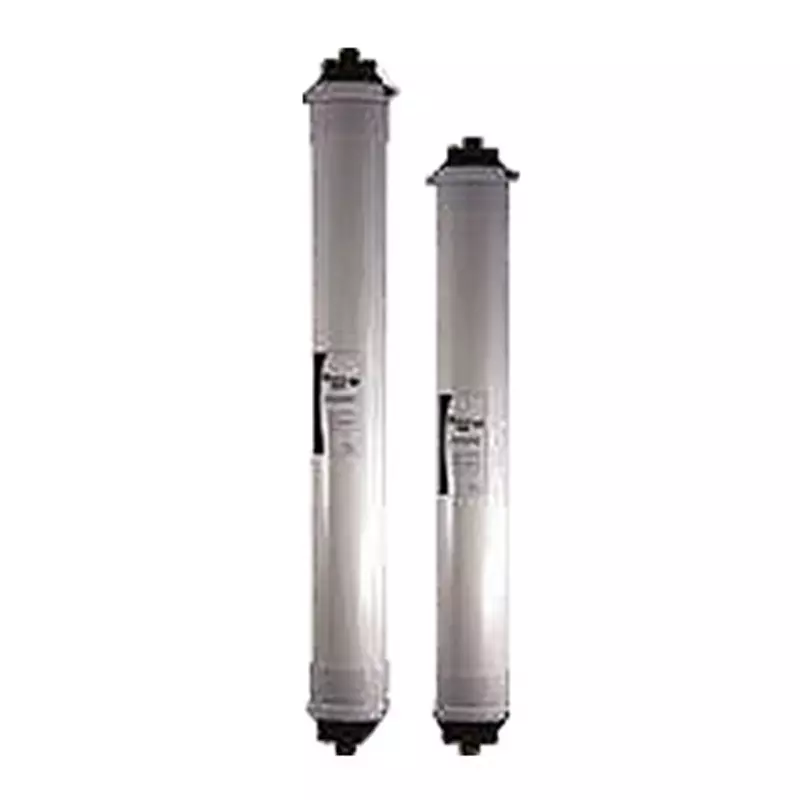
Ultrafiltration membranes are a type of microporous filtration membrane with uniform pore size specifications and a rated pore size range of less than 0.01 microns. By applying appropriate pressure on one side of the membrane, solute molecules smaller than the pore size can be screened out to separate particles with a molecular weight greater than 500 daltons (atomic mass units) and a particle size greater than 10 nanometers. Ultrafiltration membranes are one of the earliest developed polymer separation membranes, and ultrafiltration devices were realized in the 1960s. Industrialization.
Process characteristics of integrated equipment for petrochemical wastewater treatment
We all know that petrochemical wastewater is characterized by large volume, complex composition and changeable properties. Therefore, compared with other types of wastewater, its treatment cost is relatively higher. To meet the standards for petrochemical wastewater, it is not feasible to rely on a single treatment process. It is necessary to combine multiple wastewater treatment processes, which relatively increases the cost of enterprises. At present, most of the methods for treating chemical wastewater fall into two categories: one is the process mainly based on chemical catalysis; the other is biochemical treatment.
Chemical catalytic methods in actual petrochemical wastewater engineering require high temperature and high pressure to enhance their effectiveness. Therefore, when this method is adopted, the equipment cost used on-site is usually relatively high, and the amount of chemicals used is also a significant expense.
Biochemical treatment is relatively economical and efficient. Due to the poor biodegradability of chemical wastewater, it is necessary to conduct pre-treatment on the wastewater before adopting biochemical treatment. During the pre-treatment stage, the toxicity and load of the wastewater should be reduced to enhance its biodegradability. Then, biochemical treatment can be carried out, which can make the wastewater meet the standards and significantly lower the operating costs. The petrochemical wastewater recovery system adopts a design concept of recovery first and then treatment to provide a reliable solution.
Process features of the integrated equipment for petrochemical wastewater treatment
1. Strong anti-pollution capability
In the process of wastewater treatment and reuse in this system, the modified RO membrane filtration device is the core part of the system and is of vital importance. After being treated by the modified RO membrane separation and recovery device, the effluent can remove the vast majority of inorganic salts, organic substances, microorganisms and bacteria, etc., and can meet the requirements of "Water Quality for Industrial Water Reuse of Urban Sewage".
2. Cost savings
As the effluent quality of the modified membrane separation and recovery system can reach the standard of industrial tap water with a conductivity of about 150us/cm, the daily use of tap water in petrochemical production will be reduced by more than 60%, significantly lowering the water cost of tap water and the operating cost of the original chemical water system. At the same time, it can save more than 60% of the wastewater discharge cost. This significantly reduces the investment and operation costs of wastewater treatment stations.
3. Reduce pollution
This system can not only effectively save water resources, but also reduce the discharge of sewage, alleviate pollution to surrounding water bodies and improve the living environment for human beings.
How to ensure that the wastewater treated by the integrated equipment for petrochemical wastewater treatment in Chengdu meets the national discharge standards while also reducing the cost input of enterprises is a difficult problem that petrochemical enterprises need to solve.