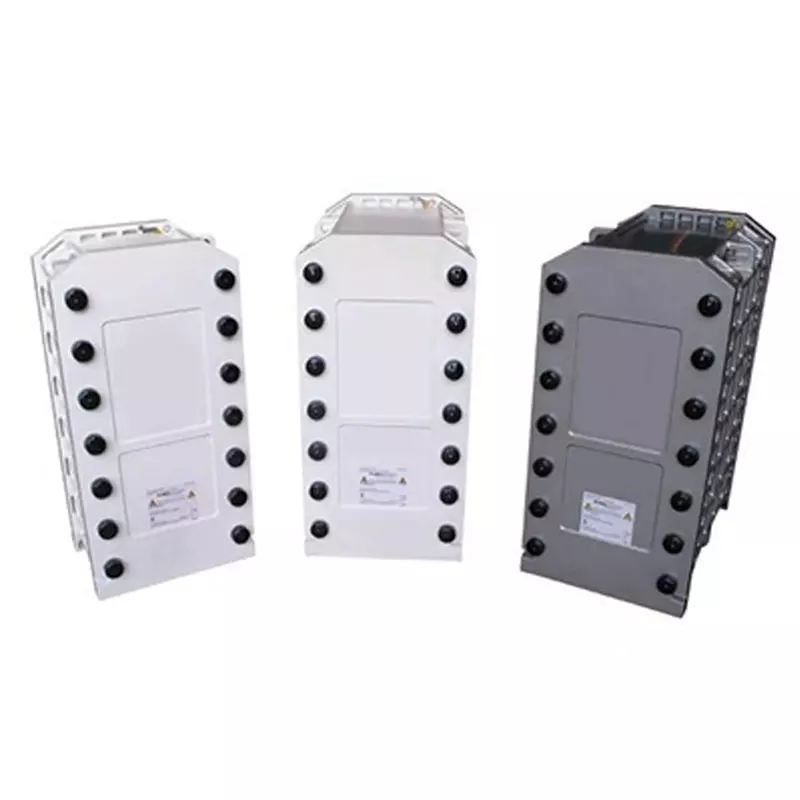
EDI(Elcctrodeionization) is a pure water manufacturing technology that combines ion exchange technology, ion exchange membrane technology and ion electromigration technology. It ingeniously combines electrodialysis and ion exchange technologies, using high voltage at both ends of the electrodes to move charged ions in water, and in combination with ion exchange resins and selective resin membranes to accelerate the removal of ions, thereby achieving the purpose of water purification. During the EDI desalination process, ions are removed through the ion-exchange membrane under the action of an electric field. Meanwhile, under the action of an electric field, water molecules generate hydrogen ions and hydroxide ions, which continuously regenerate the ion exchange resin to keep it in an optimal state.
What processes can be adopted for the integrated wastewater treatment equipment?
The chemical industry is a major water consumer. Its wastewater discharge and total pollutant volume rank second and fourth respectively among all industrial sectors in China, making it one of the key polluting industries in the country. Meanwhile, with the rapid development of China's economy, the shortage of water resources has become a limiting factor restricting the further development of China's chemical industry. To achieve sustainable development in the chemical industry, the resource reuse of chemical wastewater and the realization of zero discharge have become the key to this goal. Hanluo Environmental Protection's "Affordable" zero discharge of chemical wastewater must ensure a trinity of reliable technology, controllable cost, and thorough treatment. While reusing the wastewater, it should not cause secondary pollution to the environment. So, what processes can be adopted for the integrated wastewater treatment equipment?
Electrolysis: It is not suitable for high energy consumption, high iron consumption, and excessive sludge produced by high-concentration wastewater containing chromium. Meanwhile, the treatment of cyanide-containing wastewater is not satisfactory. Chemical methods should be adopted to treat cyanide-containing waste
Chemical reagents + air flotation method: Chemical reagents are used in oxidation-reduction processes and air flotation to separate sludge from water. Due to the large proportion of electroplating sludge and the presence of various organic additives in the wastewater, air flotation is not thorough in practical application and its operation and management are inconvenient. By the late 1990s, the application of air flotation was becoming less and less common.
Chemicals + precipitation This method is the first to be adopted. After more than 30 years of practical application and comparison, different treatment processes have been employed. At present, it has been restored to very early and effective technological processes. This method is widely applied in electroplating treatment abroad. However, after a long period of solid-liquid separation, the sludge in the sedimentation tank will turn over, and it is difficult to ensure the stability of the effluent standard.
Biological treatment process: It has a high operation effect with a small water volume and a single plating type. However, its application in many large-scale projects is very unstable because the water quality and quantity are difficult to remain constant, and microorganisms have difficulty adapting to changes in water temperature, species, and heavy metal ion concentration. However, due to the pH value, large star microorganisms die instantly, causing environmental pollution accidents, and bacterial culture is not easy.
Membrane separation method: It is a technology that separates substances by taking advantage of the selectivity of polymers, including electrodialysis, reverse osmosis, membrane extraction, ultrafiltration, etc. The electrodialysis method is used to treat electroplating industry wastewater. After treatment by the integrated wastewater treatment equipment, the composition of the wastewater remains unchanged, which is conducive to recycling and reuse.