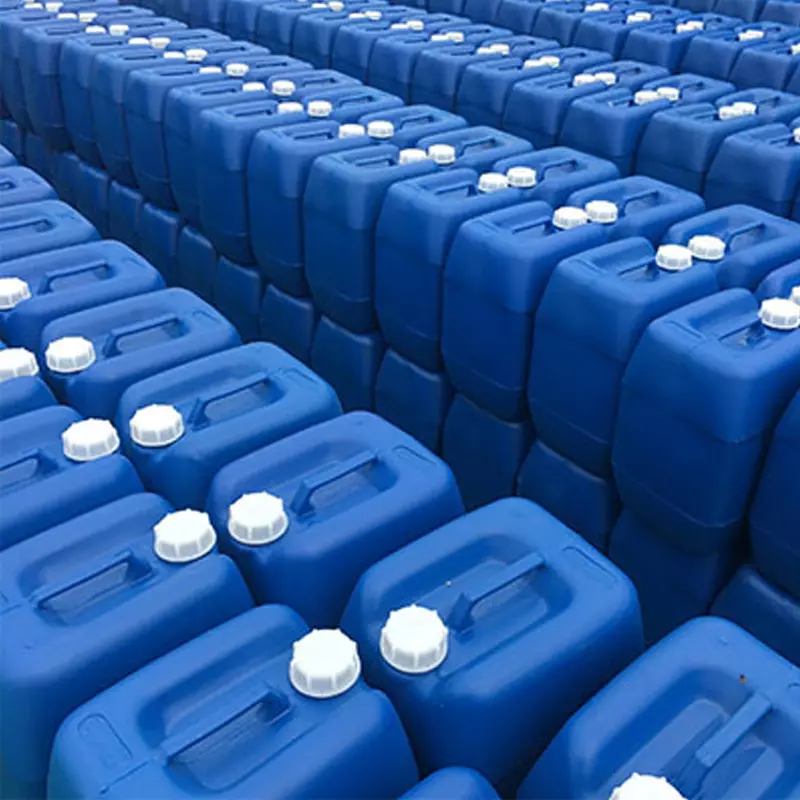
Water treatment agents are essential chemical agents in the processes of industrial water use, domestic water use and wastewater treatment. By using these chemical agents, water can meet certain quality requirements. Its primary effects include controlling the formation of scale and sludge, reducing foam, minimizing the erosion of materials in contact with water, removing suspended solids and toxic substances from water, deodorizing and decolorizing, and softening water quality, etc. At present, due to the sharp increase in water consumption in countries around the world, various environmental protection regulations (water purification laws) have been promulgated one after another, and the requirements are becoming increasingly strict. Therefore, the development of various efficient water treatment chemicals is advancing rapidly. In China, in contradiction with the increasingly severe water resource crisis, the production capacity of water treatment chemicals is very low and their quality is not regulated. Therefore, it is extremely urgent to accelerate the development of the environmental protection industry of water treatment chemicals in our country. Water treatment chemicals include flocculants, coagulants, corrosion inhibitors, scale inhibitors, biocides, dispersants, cleaning agents, pre-filming agents, defoamers, decolorizers, mixtures, dehydrogenators and ion exchange resins, etc. This article will provide a systematic introduction to flocculants and biocides. Water treatment chemicals in China only began to attract attention and gradually develop after the introduction of large-scale fertilizer plants in the 1970s. Since then, a series of water treatment agents have been independently developed and researched. The main types of water treatment agents in China include scale inhibitors, corrosion inhibitors, biocides and algaecides, inorganic coagulants, and organic flocculants.
How does the integrated wastewater treatment equipment for food processing plants carry out the treatment?
The wastewater from food processing plants has a wide range of sources and a large flow rate. Therefore, when dealing with the wastewater from food processing plants, we need to do the corresponding classification work well. Many people are not very familiar with the sewage treatment equipment for food processing plants and think that it is only for treating sewage. This view is not wrong, but while it treats domestic sewage, it also improves our living environment and keeps us away from danger.
Sewage treatment equipment for food processing plants
The wastewater from food processing plants mainly contains a large amount of disordered items in the wastewater to prevent equipment damage. The sewage that has been filtered through the grid can smoothly enter the sewage treatment equipment of the food processing plant for sewage treatment.
Process introduction of Integrated Wastewater Treatment equipment for Food processing plants
1. Regulating tank
The sewage first enters the regulating tank, which has two functions. One is responsible for removing larger inorganic particles from sewage to prevent domestic sewage from clogging and wearing down equipment pumps and pipelines. The principle is very simple. It uses sandstone, which is relatively heavy. Compared with the principle of organic matter sinking, sand and the bottom of the sinking pool, sometimes to prevent large organic particles from sinking, ventilation is also required. Another role is to act as a buffer center zone. Because the water volume varies greatly during the day, in the case of domestic sewage, the morning and evening are the peak periods for water usage. Regulating the water tank can be used to mitigate the impact of water.
2. Hydrolysis tank
The sewage filtered from the water tank flows into the hydrolysis tank, which is used to hydrolyze, acidify and methanoize organic matter, remove organic matter from the sewage and improve the sewage. Biochemical treatment is beneficial for the subsequent hydrogen-containing movement processing, a stage that usually takes a long time.
3. Aerobic tank
The hydrolyzed wastewater enters the aerobic tank, where aerobic microorganisms utilize the organic pollutants present in the water as the substrate for aerobic metabolism. A series of biochemical reactions gradually release energy, which is stabilized by low-energy inorganic substances to meet the harmless requirements, so as to be returned to the natural environment or further processed.
4. Lowering water tank
Further settle the wastewater in the aeration tank to remove some organic and inorganic small particles to meet the drainage standards
5. Equipment compartment
The main functions of the integrated equipment cabin for wastewater treatment in food processing plants are filtration, disinfection, etc. The process of treating sewage with food processing plant sewage treatment equipment is very simple, but more importantly, the quality of the food processing plant sewage treatment equipment should be considered.