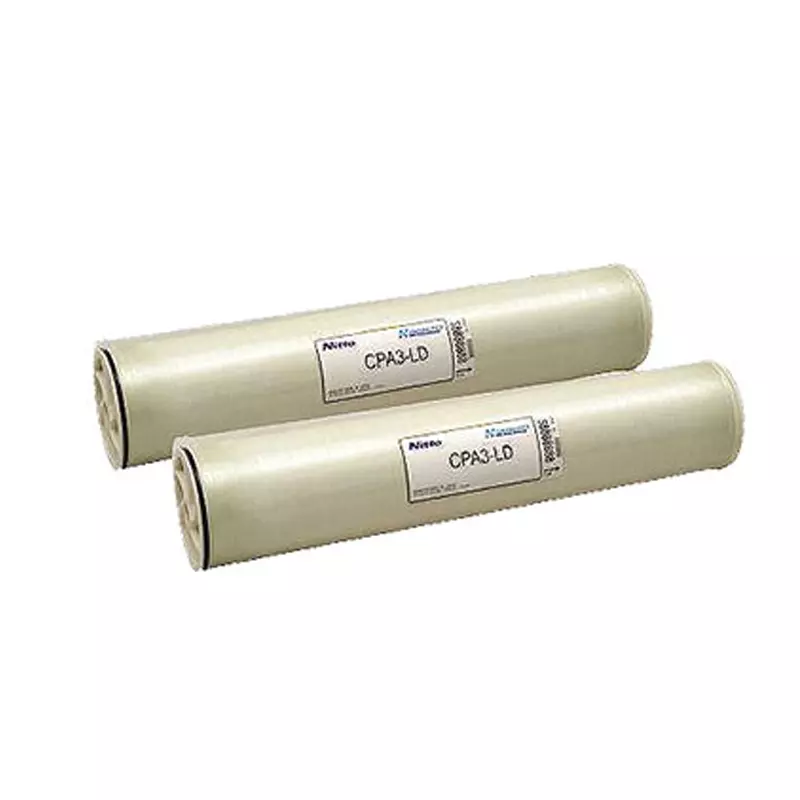
Reverse osmosis membranes are artificial semi-permeable membranes with certain characteristics made by simulating biological semi-permeable membranes and are the core components of reverse osmosis technology. The principle of reverse osmosis technology is that under the action of a pressure higher than the osmotic pressure of the solution, other substances cannot pass through the semi-permeable membrane, thus separating these substances from water. The pore size of reverse osmosis membranes is extremely small, thus they can effectively remove dissolved salts, colloids, microorganisms, organic matter and other substances from water. The system has the advantages of good water quality, low energy consumption, no pollution, simple process and easy operation.
The technologies and processes adopted by the equipment of wastewater treatment equipment manufacturers
At present, the commonly used and relatively mature technologies and processes for domestic integrated sewage treatment equipment mainly include: traditional A/ O contact oxidation process, SBR(Sequencing Batch Reactor Activated Sludge Process) process, biological rotating disc process, MBBR(Moving biological Bed) process, MBR(Membrane bioreactor) process, as well as some so-called advanced technologies and processes named by enterprises themselves In fact, most of them are the above-mentioned processes or variations of these processes. Among them, MBR and MBBR processes are increasingly favored by the market and have become the two mainstream process technologies in the integrated wastewater treatment equipment market, and have been designated as the designated processes in many bidding projects. The effluent quality of the integrated sewage treatment equipment using the MBR process can reach the first-level A standard or Class I surface water level if done well. The effluent quality of the integrated sewage treatment equipment using the MBBR process can reach the first-level B standard or even the first-level A standard if done well. Among them, The MBBR integrated sewage treatment equipment usually needs to be equipped with a deep treatment unit after biochemical treatment; otherwise, the risk of total phosphorus and SS exceeding the standard is relatively high.
So, when you encounter a salesperson from a wastewater treatment equipment manufacturer, first ask them what treatment process their integrated sewage treatment equipment uses. If they can state the treatment process directly and clearly as one or more of the above-mentioned processes, then you can further understand and seek cooperation. If someone is evasive, full of details or brazen and boasts of having developed epoch-making and revolutionary new technologies and processes, then you should be cautious. Even if they have authoritative certifications, expert endorsements or successful cases, they are very likely unreliable, because so-called authoritative certifications, expert endorsements and successful cases can all be faked.
After understanding the sewage treatment process technology of the wastewater treatment equipment manufacturer, it is also necessary to have a thorough understanding of several main design parameters of the integrated sewage treatment equipment. This is because the removal of organic matter, total nitrogen, and total phosphorus mainly relies on biochemical treatment, with physical and chemical treatment only being auxiliary means. For instance, total phosphorus and suspended solids, when biochemical treatment fails to meet the effluent requirements, Physical and chemical advanced treatment can be adopted as auxiliary treatment. For biochemical treatment processes, regardless of the technical process, the sludge load, sludge concentration, hydraulic retention time, air-to-water ratio, reflux ratio, and membrane flux of MBR are basically the same and will not have significant differences. For example, when using the MBR membrane bioreactor process, The sludge concentration is usually between 6000 and 15000mg/. When treating domestic sewage, a biochemical retention time of 7 to 9 hours is sufficient to meet the requirements. The air-to-water ratio is between 18 and 25. The membrane flux varies depending on the membrane material, pore size, film-forming process, and brand, typically ranging from 15 to 25 L/m ².h.
For the technology of sludge-water separation by sedimentation other than the MBR process, the sludge concentration is usually between 2500 and 4000mg/. When treating domestic sewage, the biochemical retention time needs to be 10 to 15 hours to meet the requirements. If some manufacturers are unwilling to disclose the design parameters or the design parameters are not within the above conventional range, then be cautious. One possibility is that the technical strength of the wastewater treatment equipment manufacturer is weak, and they have no understanding of process design at all, merely imitating and making. Another possibility is that they are exaggerating and deceiving. To prevent being deceived, it is essential to ask the manufacturer to explain the design principle clearly. If the manufacturer refuses to explain on the grounds of technical confidentiality, it is better for you to stay away from them as soon as possible.