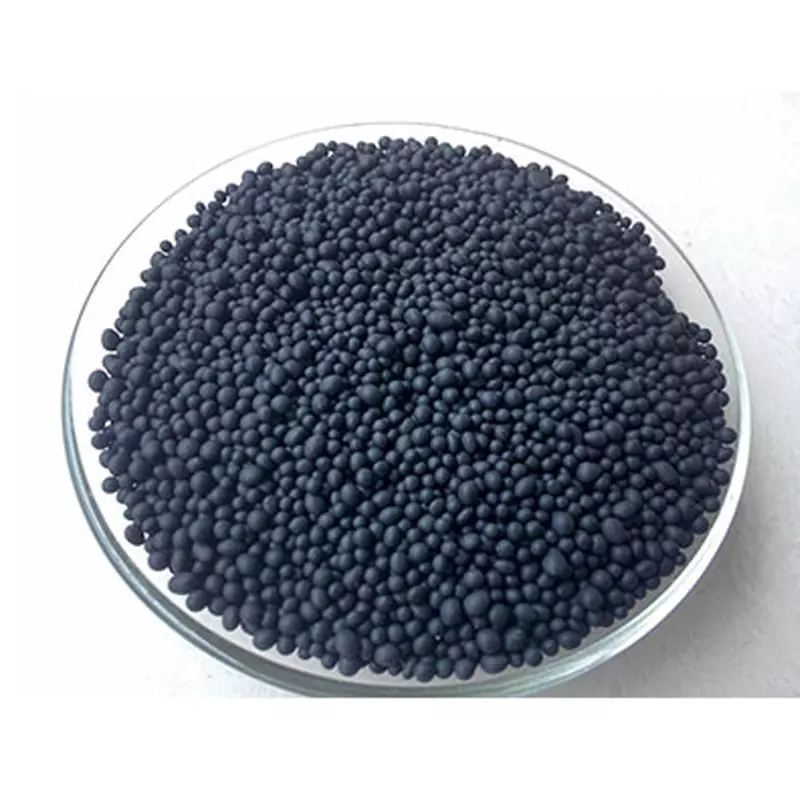
Coconut shell activated carbon is made from high-quality coconut shells through a series of sophisticated production processes. Coconut shell activated carbon appears black and granular. It features well-developed pores, excellent adsorption performance, high strength, easy regeneration, and economic durability.
The product is mainly used for the purification, decolorization, dechlorination and deodorization of drinking water, pure water, wine-making, beverages and industrial wastewater. It can also be used for mercaptan removal in the oil refining industry, etc.
Medical wastewater treatment equipment ensures the stability of water treatment
Medical wastewater treatment equipment is generally buried underground and uses a secondary biological contact oxidation treatment process. Its treatment effect surpasses that of the fully mixed biological oxidation tank, and its high adaptability to water quality ensures the stability of water treatment. This equipment adopts a new type of elastic three-dimensional filler in the tank, which has the function of removing organic substances in the sewage. After oxidation treatment, the amount of sludge produced is small and only needs to be discharged once every 90 days. To prevent the breeding and spread of bacteria, it is essential to conduct deep disinfection of water quality. Currently, the most commonly used disinfection processes include ultraviolet disinfection, ammonia dioxide disinfection, and ozone disinfection.
Process flow: Domestic sewage - bar screen → regulating tank - pump - primary sedimentation tank - A-stage biological tank → 0-stage biological tank → secondary sedimentation tank - disinfection tank - discharge
Daily maintenance of the equipment, including inspection, cleaning, lubrication and other external maintenance tasks, is the responsibility of the management personnel and is part of the work coordination. 1.2 Secondary maintenance involves rigorous inspection and repair, including replacing parts and components and restoring the accuracy of the equipment, etc. It will be carried out by professional maintenance staff. 3. Advanced maintenance: Thorough inspection and maintenance of easily damaged parts and components, including lubrication, cleaning of equipment and disassembly and assembly of parts, calibration, etc., is usually carried out by management personnel under the guidance of professional maintenance staff.
4. Minor repairs refer to partial maintenance with relatively less work, involving only partial repairs, replacements, and calibrations
5. Medium repair is a kind of repair plan with a large amount of work. The equipment provider arranges it once every one to three years. The details include replacing and repairing the main parts of the equipment, inspecting the overall equipment and calibrating it to ensure that the equipment meets the necessary technical standards.
6. Major overhauls involve inspecting, disassembling, repairing, replacing, calibrating the entire equipment, then reassembling it into a new complete machine, and repainting or repainting the exterior of the equipment. Under normal circumstances, it is implemented only once every ten years or even a dozen years.
7. Repair plan for medical wastewater treatment equipment: During the operation of the equipment to treat sewage, its components and important parts will constantly "wear out", which will affect the function, condition and safety performance of the equipment. Through the "wear and tear" of the equipment and daily maintenance, planned inspection and repair should be carried out to ensure that the equipment is in good condition during operation The main contents of the medical wastewater treatment equipment repair plan include daily maintenance, regular inspection and planned repair.