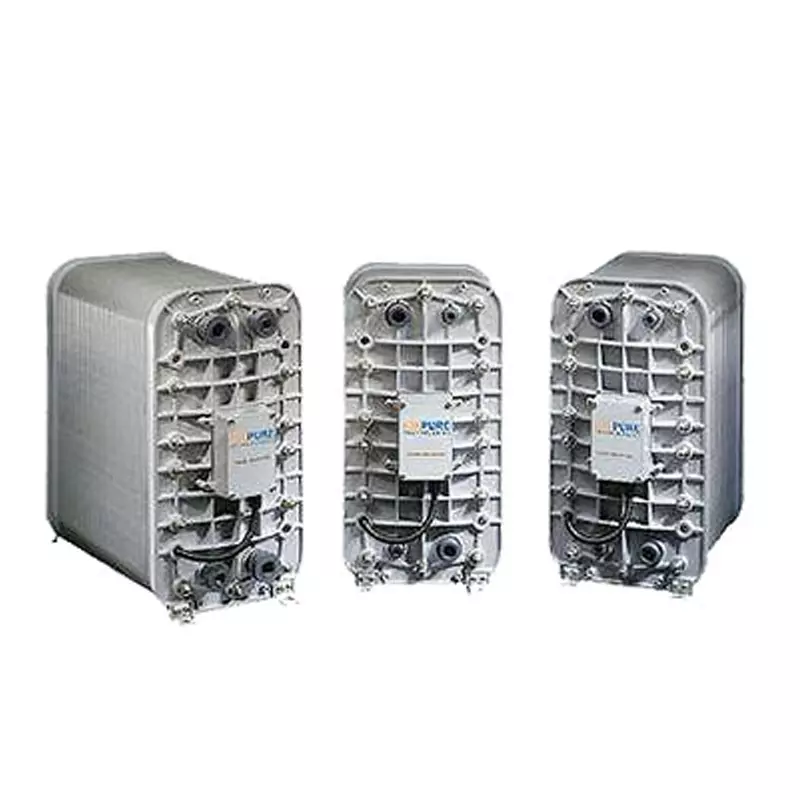
EDI(Elcctrodeionization) is a pure water manufacturing technology that combines ion exchange technology, ion exchange membrane technology and ion electromigration technology. It ingeniously combines electrodialysis and ion exchange technologies, using high voltage at both ends of the electrodes to move charged ions in water, and in combination with ion exchange resins and selective resin membranes to accelerate the removal of ions, thereby achieving the purpose of water purification. During the EDI desalination process, ions are removed through the ion-exchange membrane under the action of an electric field. Meanwhile, under the action of an electric field, water molecules generate hydrogen ions and hydroxide ions, which continuously regenerate the ion exchange resin to keep it in an optimal state.
Introduce the factors that can affect the coagulation effect of sewage treatment
With the severity of water pollution, many factories will treat the wastewater produced during the production process through integrated wastewater treatment equipment before discharging it up to standard. When the wastewater is discharged to zero, start and check the circuit carefully to ensure that the wiring of the control cabinet is correct and that the voltage and current meet the requirements. This control cabinet can simultaneously control one submersible sewage pump and one zero-discharge wastewater fan, and is also equipped with manual and automatic control systems. When starting the water pump, check whether there is any leakage or suction in the water pump pipeline and whether there is any blockage.
All kinds of zero-discharge electrical equipment for wastewater are equipped with circuit short-circuit and over-carrier devices, and at the same time, indicator lights are set up to show the working status of each electrical equipment.
2. The start-up, shutdown and switching of all kinds of electrical equipment for zero discharge of wastewater are automatically linked by the programmable controller according to the program. Meanwhile, there is an automatic and manual conversion switch on the control cabinet panel, which can be switched to manual control when necessary.
3. The zero-discharge wastewater fan generally needs to have its oil changed once every six months or so to extend the fan's service life.
The zero-discharge wastewater pump adopts an anti-clogging and anti-tearing submersible sewage pump. The control of the pump is accomplished by the liquid level controller by detecting the liquid level in the sewage tank. When the liquid level rises from low to high and reaches the working water level, the working pump starts. If the zero-discharge wastewater liquid level drops to the warning water level, the working pump is turned off. When starting the fan, check whether the rotation direction is correct. Reverse rotation is strictly prohibited
During the operation of integrated wastewater treatment equipment, there are several factors that affect the coagulation effect of sewage treatment, and the influencing factors are diverse. The main ones include the type, concentration and dosage of coagulant, the stirring condition during coagulation treatment, PH value, temperature and its changes, etc. Below, the wastewater treatment equipment manufacturer will specifically introduce which factors will affect the coagulation effect of sewage treatment.
1. The type and dosage of coagulant: Different types of wastewater should be treated with different humidants. The dosage of coagulant has a significant impact on the coagulation effect. Both excessive and insufficient amounts will lead to the dispersion and stability of sol particles. Therefore, the optimal dosage should be determined through experiments. Generally speaking, the dosage of inorganic coagulants is relatively high, often reaching several hundred to several thousand mg/L, while organic high-molecular polymer coagulants are mainly used for coagulation assistance, with a smaller dosage, usually around 1.0 mg/L, and no more than 25mg/L at most.
2. The influence of stirring and reaction time: After a certain coagulant is fully dissolved, the resulting colloids come into contact with the original colloids and suspended solids in the water, forming numerous tiny flocs. This process is also known as mixing. The mixing process requires that the water flow generate intense turbulence to fully mix the chemicals with the water within a relatively short period of time. The mixing time is generally required to be from tens of seconds to 2 minutes. Mixing is generally accomplished by hydraulic or mechanical methods.